
Showing posts with label Environment. Show all posts
Showing posts with label Environment. Show all posts
Saturday, June 20, 2015
Mossom Creek fish hatchery rises from the ashes
A few weeks ago I mentioned that we were producing a video about the remarkable resurrection of the volunteer-run Mossom Creek fish hatchery after a devastating fire. Thanks to Lafarge, other supporters and numerous volunteers, the hatchery is now back and better than ever.

Friday, May 29, 2015
Bull's eye! Organic greens and biodegradable plastic packaging.

I don't know about you, but when I buy organic greens (which is all time time), I don't feel good about the plastic packaging. Organic food and traditional packaging is an unfortunate contradiction. So I was pleased to find this organic produce from Kildara Farms that's packaged in biodegradable plastic bags. Also, kudos to Thrifty Foods for carrying this produce and Richmond Plastics for manufacturing the bags.
Yes, recyclable plastic packaging is a good thing. But biodegradable is even better. It makes me want to burry the plastic in my garden and see what happens. I can't say I've ever wanted to try that with normal plastic.
More information: kildarafarms.com
Friday, May 22, 2015
How to build a podium (and a community)

Yesterday I documented the re-opening of the Mossom Creek Fish Hatchery in Port Moody, BC.
I get to attend a lot of events where people are speaking at a podium. The people are usually remarkable, but the podium itself is forgettable. (That's hatchery co-founder Ruth Foster in the photo; she qualifies as remarkable).
Also qualifying as remarkable is Rod MacVicar, another co-founder of the volunteer-run hatchery. Rod designed and built the podium using sustainable materials. Very fitting!
For the backstory on how the community came together and literally made this facility rise from the ashes, visit their website at www.mossomcreek.org
Also, check back here in a few weeks. I'll link to Lafarge's YouTube channel so you can view the video we're producing about Mossom Creek. Lafarge was a major sponsor in the rebuilding of the fish hatchery.
Saturday, May 9, 2015
A battery that charges in only one minute
Some very clever people at Stanford University are working on a new battery technology that can charge in one minute. They say it is safe, even when you penetrate it with a drill (other batteries would probably catch on fire). It's still a lab project, but it seems to hold some promise.
Saturday, May 2, 2015
Wheels with solar panels can power a bicycle
These people in Denmark are working on a solar powered electric bike where the solar panels are actually embedded into the wheels. The wheels charge the battery when parked, which in turn powers the bike when in motion. But don't expect this invention to directly power the wheels without charging the battery first. At least not yet.
Saturday, April 4, 2015
Quest carbon capture and storage project to reduce carbon footprint
Although the world is working on alternate energy sources to reduce the threat of climate change, most people acknowledge that fossil fuels will be with us for some time. So Shell is working on a project called Quest that will reduce the amount of CO2 emitted in the production of fossil fuels. The project is scheduled to become operational later this year.
Saturday, March 28, 2015
Space-based solar power systems could beam electricity from orbit to Earth
Even the biggest proponents of solar power know there are problems with the technology: most notably, the sun does not always shine. Night time and cloudy days don't generate much, if any, electricity. But what if you could position solar panels in orbit (where the sun always shines) and beam electricity to Earth? Some very clever people are working on the idea!
Saturday, March 14, 2015
nanoFlowcell might beat Tesla at the electric car game
A European company called nanoFlowcell is developing their Quant electric cars without traditional batteries. Instead, they have two fluid reservoirs – one for a negatively charged electrolyte and one for a positively charged electrolyte. A membrane between the two electrolytes generates a current, powering the electric motors.
This would seem to solve the three big issues with battery electric vehicles – recharge time, range and infrastructure. The electrolyte fluids can be filled-up in about the same amount of time as petrol. The first two Quant prototypes have a range of 800 kms (for the large car) and 1,000 kms (for the small car). And you would think that existing gasoline stations could be easily retrofitted to dispense the fluids since they're already in that business.
It will be interesting to see how this technology develops.
Saturday, January 31, 2015
Waste not. Drink lots.
Here's a story that crosses over between the topics of health and energy. This process takes human waste and converts it into pure drinking water, heat and electricity. Watch one of the richest people in the world, Bill Gates, drink water that was converted from sewerage.
Saturday, December 6, 2014
1 percent is a big number

Change initiatives based on consumers voting with their dollars can be very powerful. Businesses that participate in 1% For The Planet do just what the name suggests: they donate 1% of their gross sales to non-profit organizations involved in environmental initiatives. Visit www.onepercentfortheplanet.org for more information.
Wednesday, November 19, 2014
French fries to fuel

In New York, this company picks up used cooking oil from restaurants and converts it into biodiesel, a fuel with a low carbon footprint. Can all the spent cooking oil in the world replace petro-diesel? Probably not. But turning waste into something useful is generally a good idea.
Wednesday, November 5, 2014
Compostable plastic

Speaking of composting, here's a progressive item. This paper cup at Teaja in Vancouver is compostable (not all that new). But the plastic lid is also compostable! Guilt-free takeout is upon us.
Saturday, November 1, 2014
Composting at David's Tea


Many of us tea drinkers know that our tea leaves and bags are compostable. Problem is, most tea shops don't provide a way to compost them. Kudos to David's Tea on Bleeker Street in NYC for solving this problem.
Wednesday, October 29, 2014
"Scent marketing" a bad idea

When my wife and I checked-in to a Yaletown-area hotel in Vancouver, we noticed a perfumed odour in the air. The next morning, we both woke up with splitting headaches (which has never happened before). The scent had made both of us ill, so we checked-out and got some fresh air. Problem solved.
I learned that some hotels now inject scents into the interior air through their ventilation systems in a new trend called "scent marketing". Apparently, the scent gives customers a point of differentiation and positive association with the location.
I'm not normally sensitive to perfumes, but many people are. In some jurisdictions, this sort of sensitivity is actually considered a disability. Aggravating people with disabilities is generally a bad idea!
Saturday, August 30, 2014


Saturday, August 23, 2014
An unexpected variation on the green roof concept

Green roofs are becoming all the rage in urban areas. They add biodiversity while keeping buildings cooler. This roof in the Greenwich Village area of Manhattan ads some seasonal flair with sunflowers.
Saturday, August 16, 2014
Hydrostor might solve the Achilles' Heel of renewable energy
OK, back to the subject of storing renewable energy to be used when the wind doesn't blow and the sun doesn't shine. Could Hydrostor have the solution?
Saturday, August 9, 2014
Are processed foods making us sick and affecting our genes?
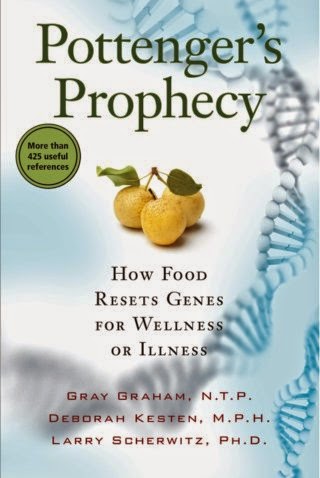
Could it be that our diet of processed foods is shortening our lifespans, causing chronic disease and hurting our offspring? Could it be that the diet of our great grandparents and other ancestors was actually better? Were they more clever than us?
Probably.
To find out more, you might want to check out the book, Pottenger's Prophecy or listen to a podcast with the lead author here:
Interview with Gray Graham
Wednesday, August 6, 2014
TED Talk: Is the obesity crisis hiding a bigger problem?
Some clever people are starting to question the typical North American diet and link it to many health issues. Dr. Peter Attia shares his personal and professional observations in this moving TED Talk.
Saturday, August 2, 2014
How to make an electric car go 1,000 miles on a charge
Could aluminum air batteries provide the solution to range anxiety with electric cars? Phinergy and Alcoa may have the solution.
Subscribe to:
Posts (Atom)